Start with the business.
Translate the problem into clear requirements. Understand the constraints before choosing the services.
AZURE SOLUTIONS ARCHITECT
Connecting infrastructure, data and AI with the governance and cost discipline that make cloud solutions work.
Azure Solutions Architect Expert · Greater Chicago area
01 / THE APPROACH
A design needs to make sense for the people who fund it, build it and keep it running.
Translate the problem into clear requirements. Understand the constraints before choosing the services.
Bring identity, networking, monitoring and recovery into the design from the beginning.
Explain what a decision means for cost, security and complexity—then revisit it as needs change.
IN FOCUS / FINOPS
At D&W Fine Pack, I reduced Azure spend by more than 50% in three months—from approximately $40,000 to under $20,000 per month—while maintaining uninterrupted 24×7 manufacturing ERP operations.
See how I approached itEstablish a baseline and connect resources to owners and workloads.
Review utilization, service choices and commitments against business needs.
Track cost alongside reliability and performance, with clear accountability.
02 / SELECTED WORK
Enterprise results and ongoing project work.
Grounded in infrastructure, governance and cost.
More than 50% lower monthly Azure spend in three months, with no disruption to 24×7 manufacturing ERP.
How can a team reduce avoidable cloud spend while preserving the reliability its workloads need?
Worked with stakeholders to understand utilization, archived dormant data, scheduled off-hours shutdowns, applied reservations to steady-state workloads, and right-sized storage and databases.
Monthly Azure spend fell from approximately $40,000 to under $20,000 in three months. Manufacturing ERP operations continued without disruption.
Exploring how structured data, traceable sources and deterministic calculations can support AI-assisted analysis.
How can a reviewer follow a financial conclusion back to its calculations and evidence?
Separate calculations from generated narrative. Validate structured inputs and retain source references so a person can check the result.
The universal architectural framework explores coexistence, migration and human review. Explore the KFA framework →
A standardized “Shop in a Box” model to integrate acquired locations consistently and securely into corporate Azure landing zones.
How do you give teams room to deliver while maintaining consistent controls?
Architected and deployed the “Shop in a Box” model, enforced Azure Policy and RBAC governance, and developed PowerShell automation to improve deployment consistency.
Designed and scaled Azure-based VDI and coordinated a 100-server migration from VMware ESXi to bare-metal Windows Server hosts across shop locations.
ARCHITECTURE NOTEBOOK
Concept sketches, working references and perspectives on cloud architecture. These are starting points for discussion and detailed design.
© 2025 John Wilhelmi. All rights reserved.
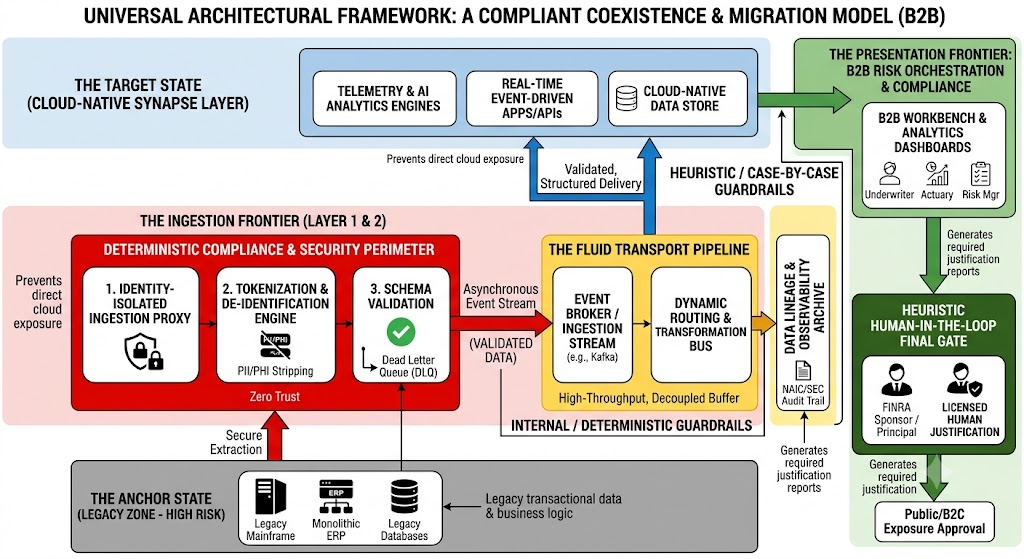
Architecture concept
A proposed path from legacy systems through isolated ingestion, de-identification and schema validation into cloud services, with data lineage and human review before external delivery.
The diagram expresses intended controls; compliance and isolation require implementation and validation for each use case.
View full-size image (new tab)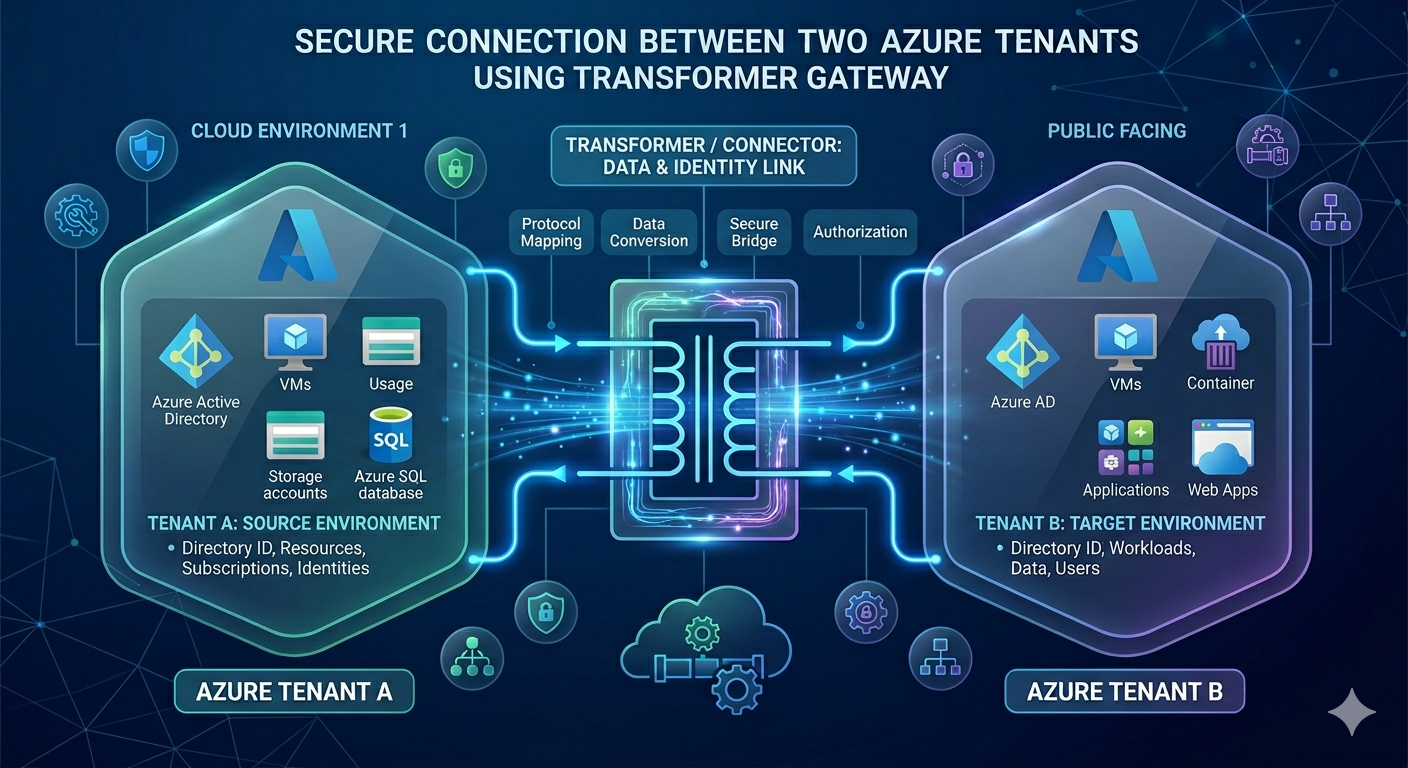
Integration concept
An exploration of protocol mapping, data conversion and authorization at the boundary between two environments.
“Transformer gateway” is a conceptual component in this sketch. A detailed design still needs explicit identity, network and data-access boundaries.
View full-size image (new tab)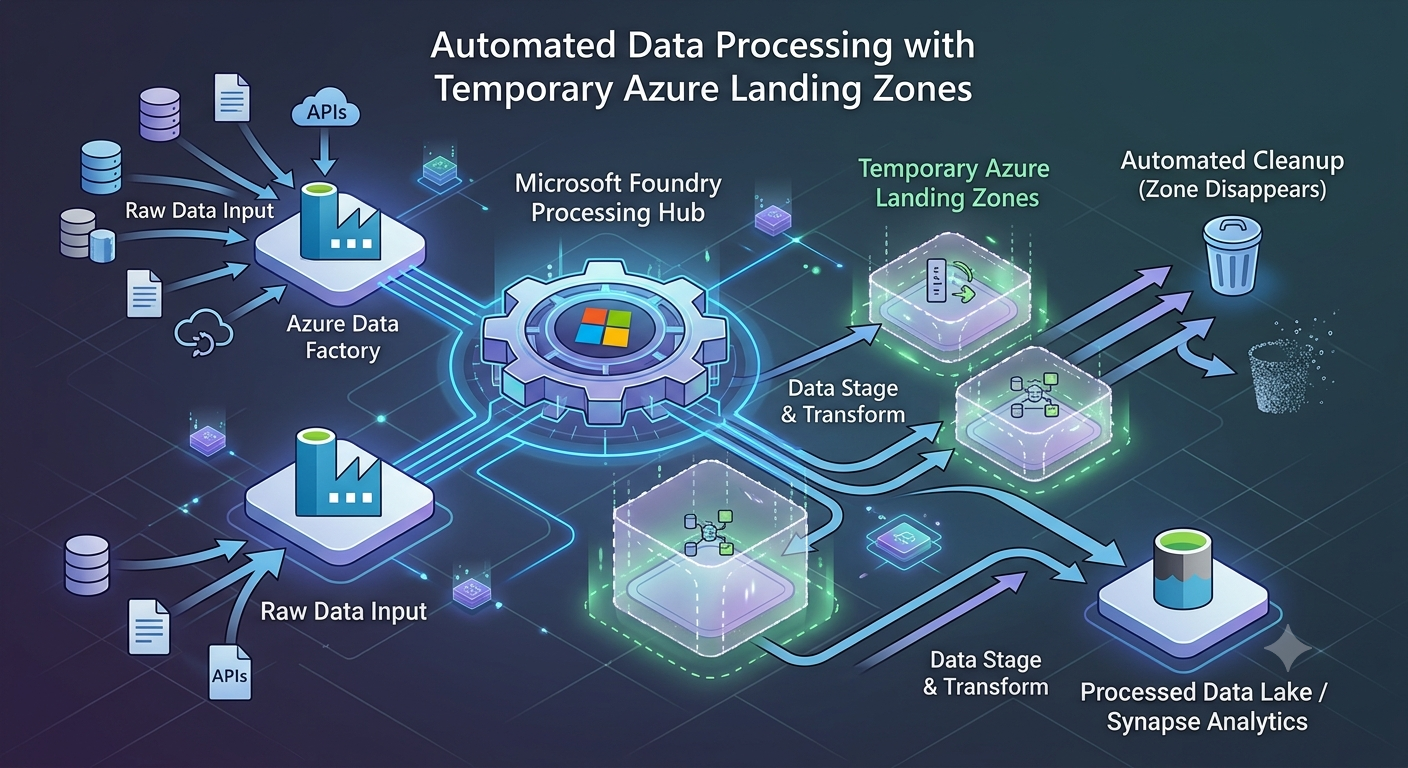
Data architecture concept
An exploration of creating temporary staging and transformation resources, delivering processed data, and cleaning up resources after completion.
The next design step is to specify orchestration, failure recovery, retention and cleanup verification. Service labels represent the original concept.
View full-size image (new tab)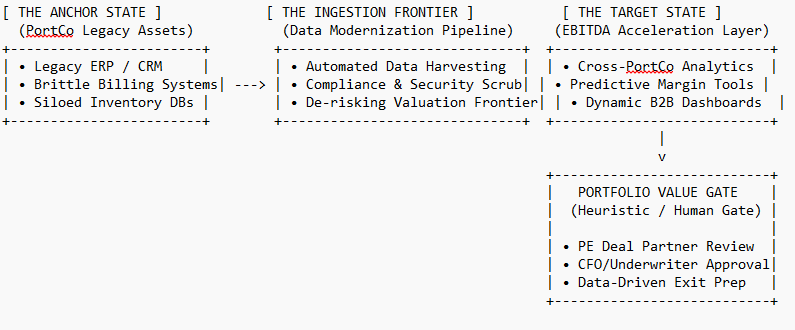
Business architecture concept
A proposed flow from portfolio-company legacy assets through data modernization to analytics and a human decision gate.
The target outcomes are design goals, not measured financial results.
View full-size image (new tab)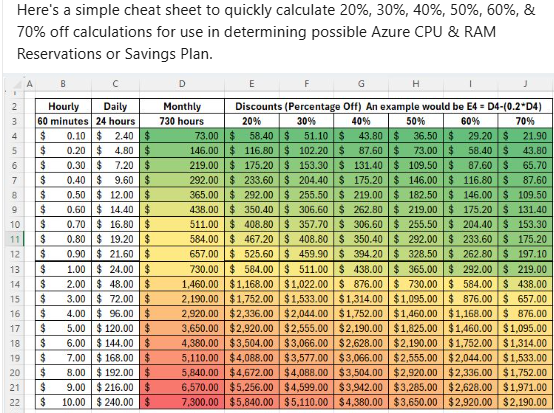
Illustrative worksheet
A quick comparison of hourly rates, 24-hour daily costs and monthly estimates based on 730 hours. Monthly cost after a discount equals hourly rate × 730 × (1 − discount).
For example, $1/hour gives $730/month, or $511 with an assumed 30% discount. The sheet does not specify VM sizes, regions, licensing or current Azure offers; actual discounts and total costs need a workload-specific estimate.
View full-size image (new tab)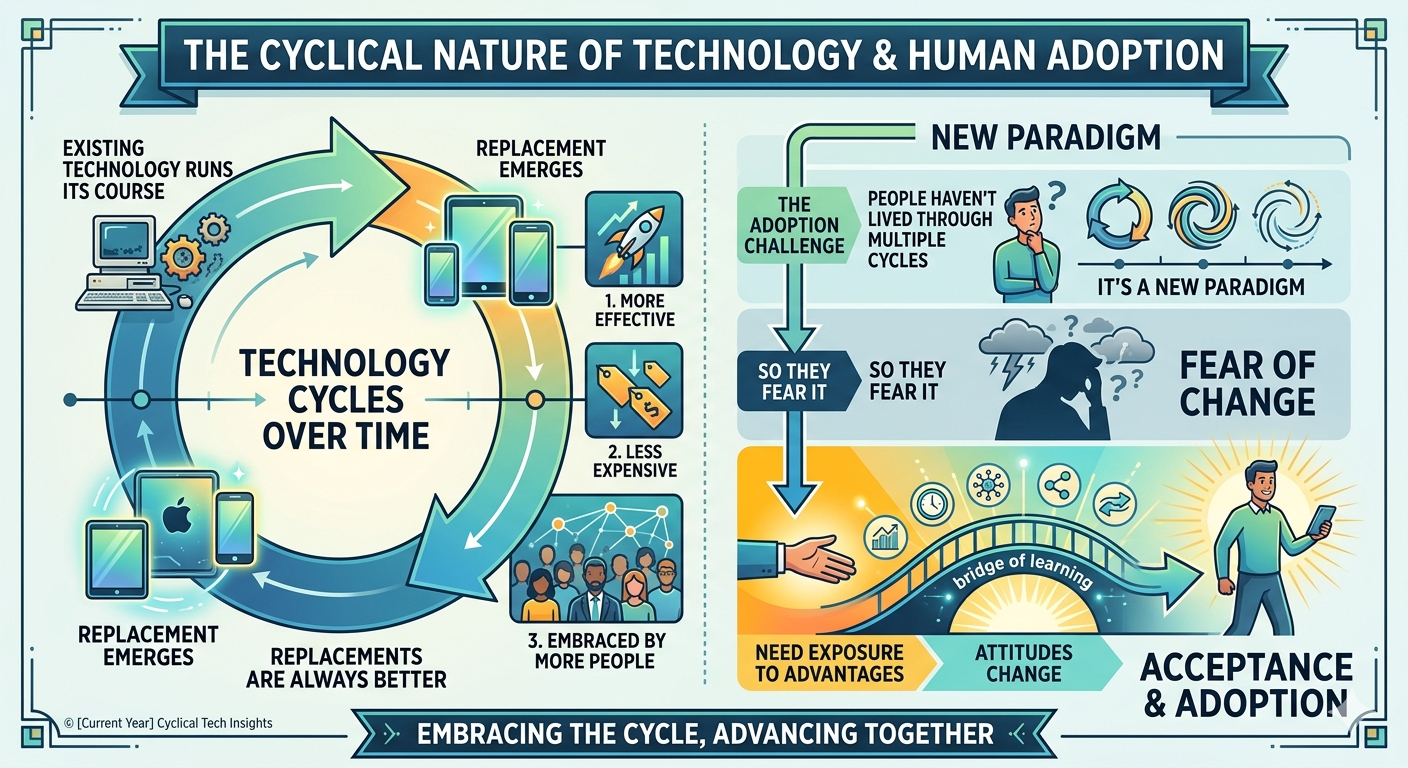
Perspective
A visual starting point for discussing the relationship between technology cycles, learning and adoption.
My practical takeaway: evaluate the benefits and tradeoffs, then give people the context and support to adopt a change. Newer technology is not automatically better for every workload.
View full-size image (new tab)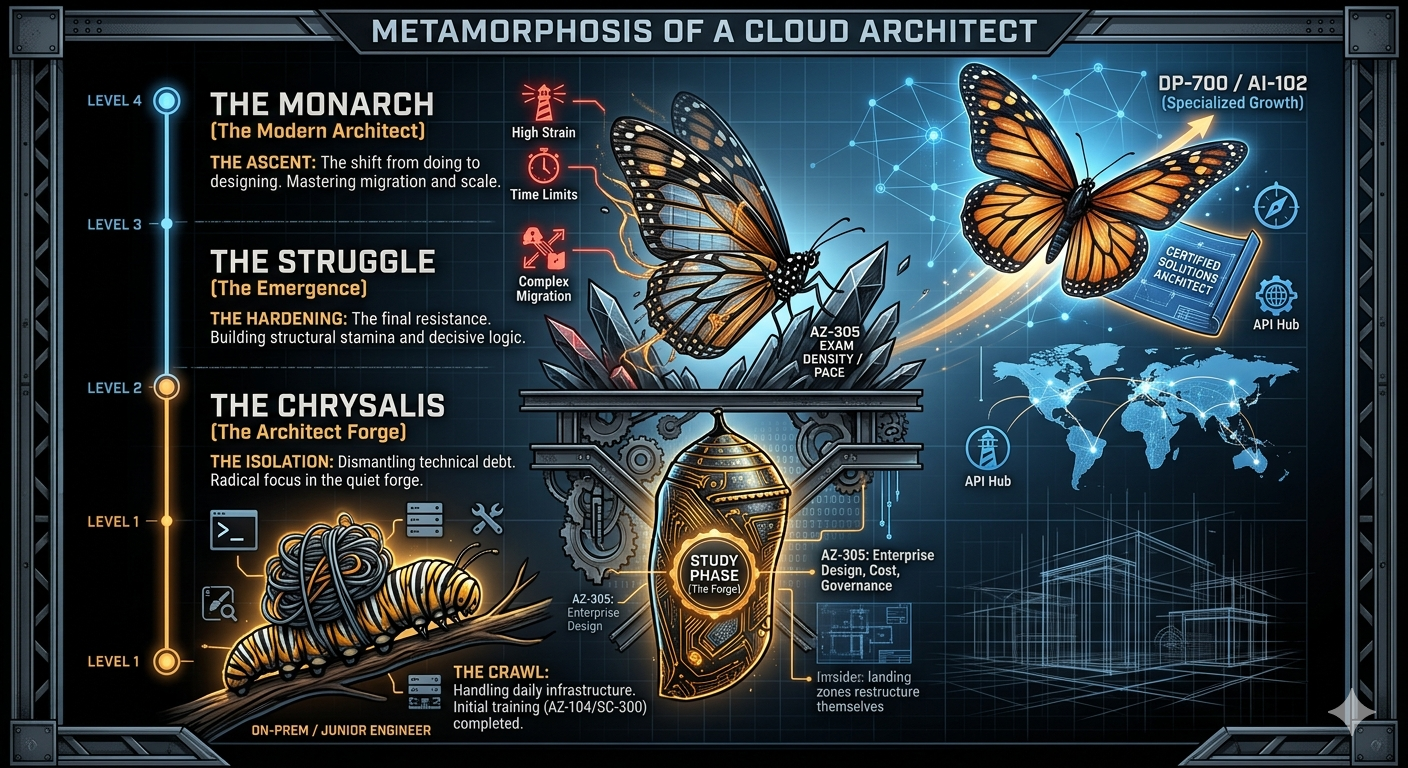
Career reflection
A visual metaphor for expanding from hands-on infrastructure work into architecture, migration, cost and governance decisions.
Exam labels in the illustration describe a learning journey; earned qualifications are listed in the credentials section.
View full-size image (new tab)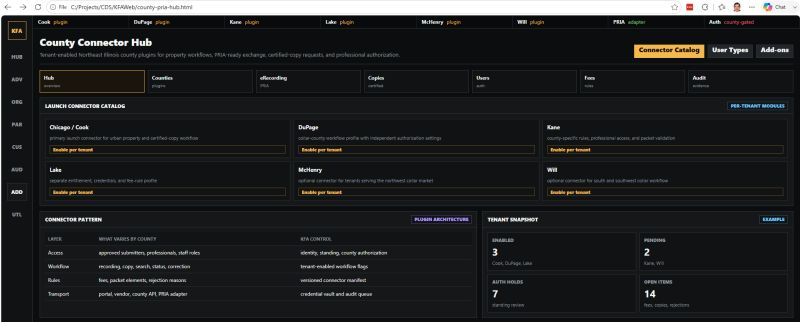
Product prototype
A prototype for organizing county-specific connectors, tenant enablement, authorization status and audit workflows in one place.
The screenshot shows a proposed interface and example tenant counts; it does not establish live county integrations.
View full-size image (new tab)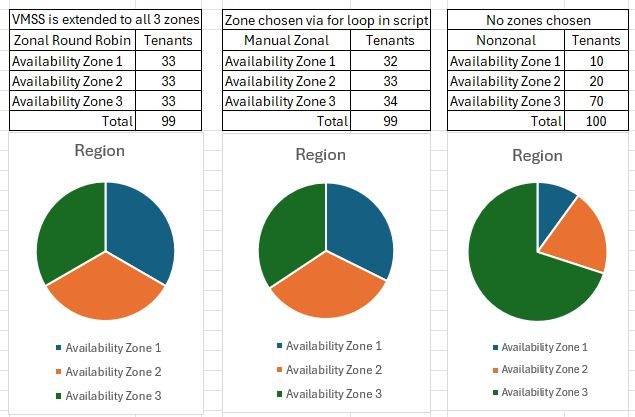
Illustrative comparison
A comparison of evenly distributed, explicitly assigned and unevenly distributed workloads across three zones.
The counts illustrate scenarios, not guaranteed Azure placement behavior. The first two examples total 99 tenants; the third totals 100.
View full-size image (new tab)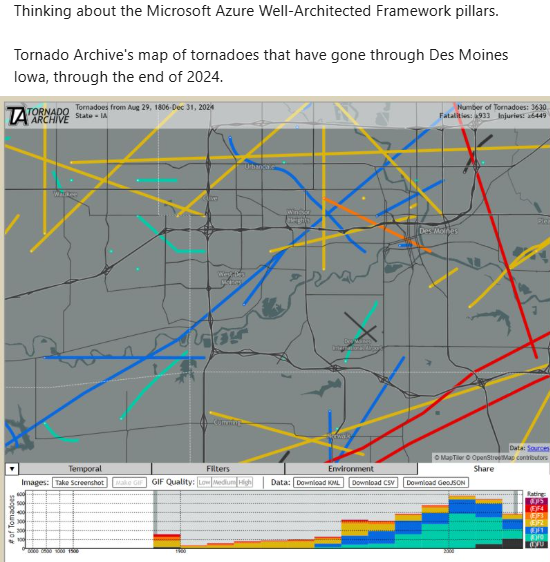
Resilience perspective
A supplied Tornado Archive map of the Des Moines area prompts a broader discussion about geographic hazards and recovery planning.
Historical tracks alone do not establish risk to a particular datacenter. A design needs workload recovery objectives, dependency analysis and verified regional information. Map credit: Tornado Archive; underlying map attribution remains visible in the image.
View full-size image (new tab)
03 / THE PERSON BEHIND THE DESIGN
I’m John Wilhelmi, a cloud architect with nearly 30 years in technology, including more than 11 years in infrastructure and cloud engineering. I design Azure environments that balance performance, security, governance and cost.
I’m interested in the decisions that connect those disciplines: how a solution is secured, how it is operated, what it costs and how its value can be measured.
My experience spans enterprise cloud engineering, managed services and business ownership. I completed my B.S. in Cloud Computing at Western Governors University in March 2026 and earned Azure Solutions Architect Expert in September 2026.
EXPERIENCE & CREDENTIALS
Microsoft Fabric, Synapse Analytics, Databricks and Terraform: lab and academic experience. Agentic AI: ongoing project work.
A COLLEAGUE’S PERSPECTIVE
“John is the kind of engineer who does not stop at keeping systems up. He designs the next state.”
RÉSUMÉ
Download my résumé for professional experience, certifications, education and selected projects.
LET’S CONNECT
I’m interested in conversations about Azure architecture, governance, FinOps and practical AI solutions.
Architecture, cloud infrastructure and technical leadership.
Cloud design reviews, governance and cost assessments.
Greater Chicago area · Open to contract, contract-to-hire and full-time engagements